Cart 0

JUVENILE IN
JUSTICE


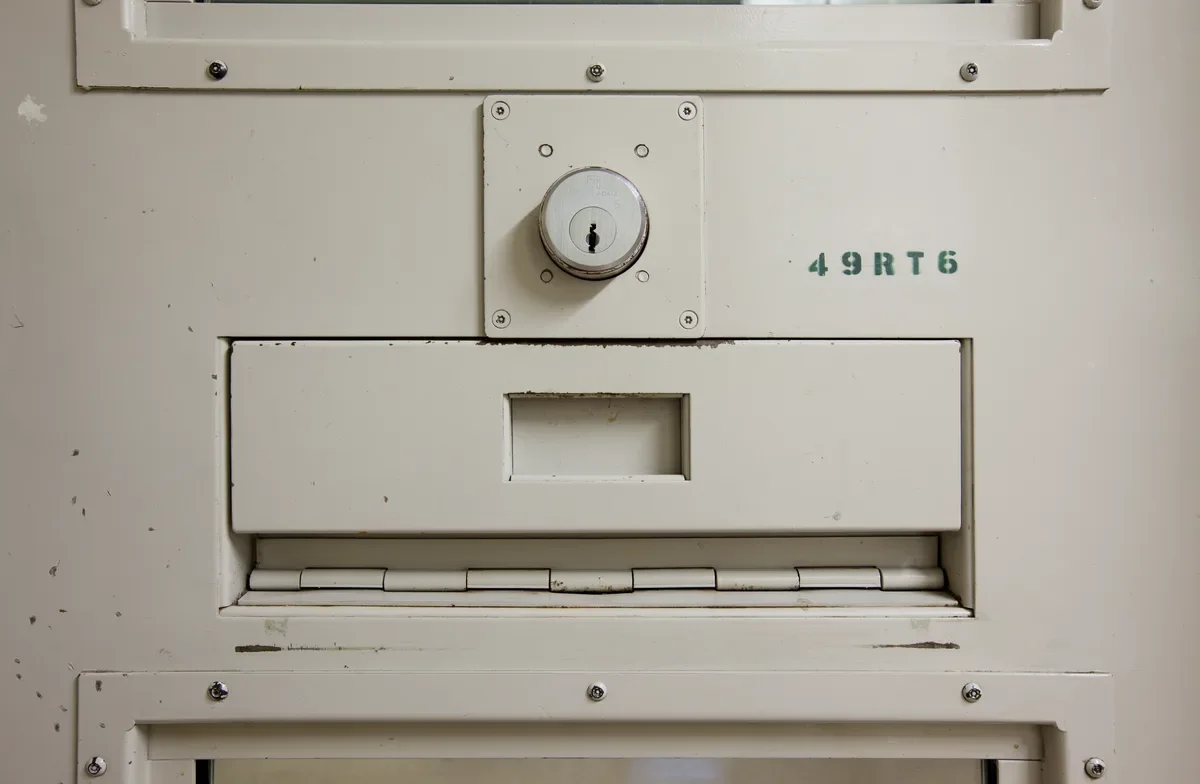
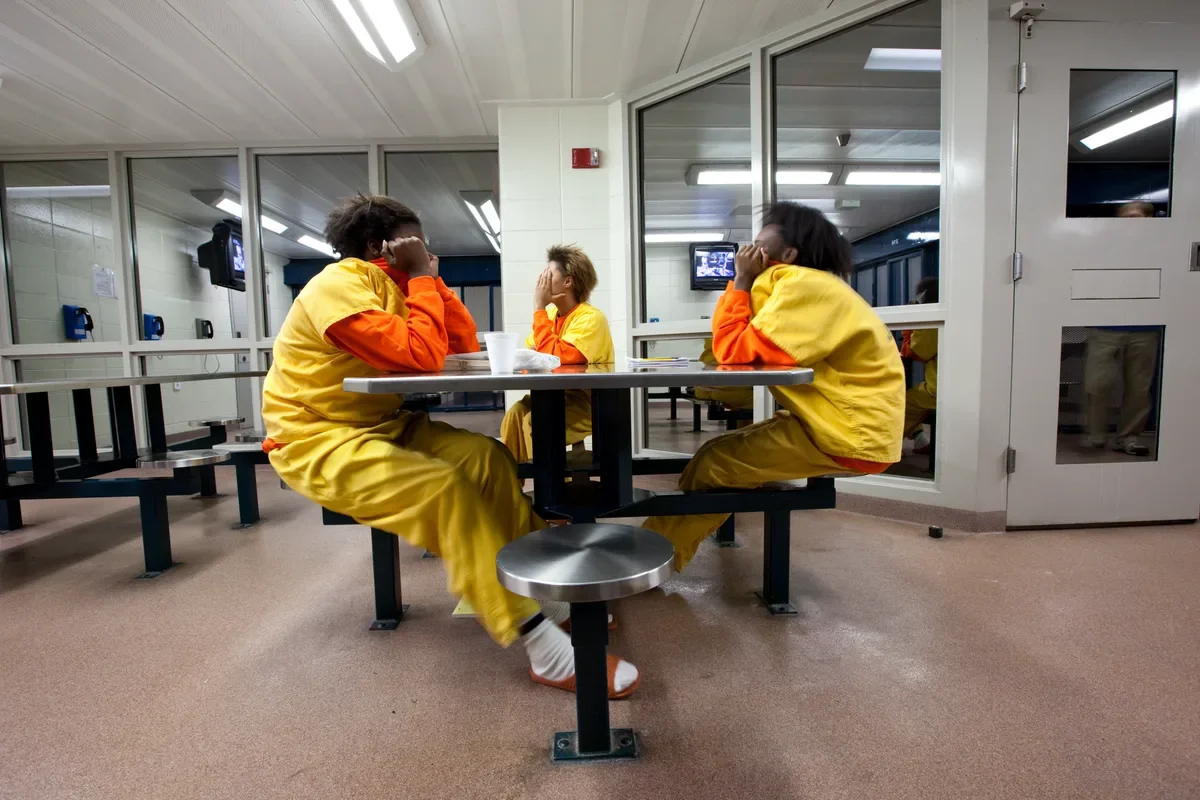
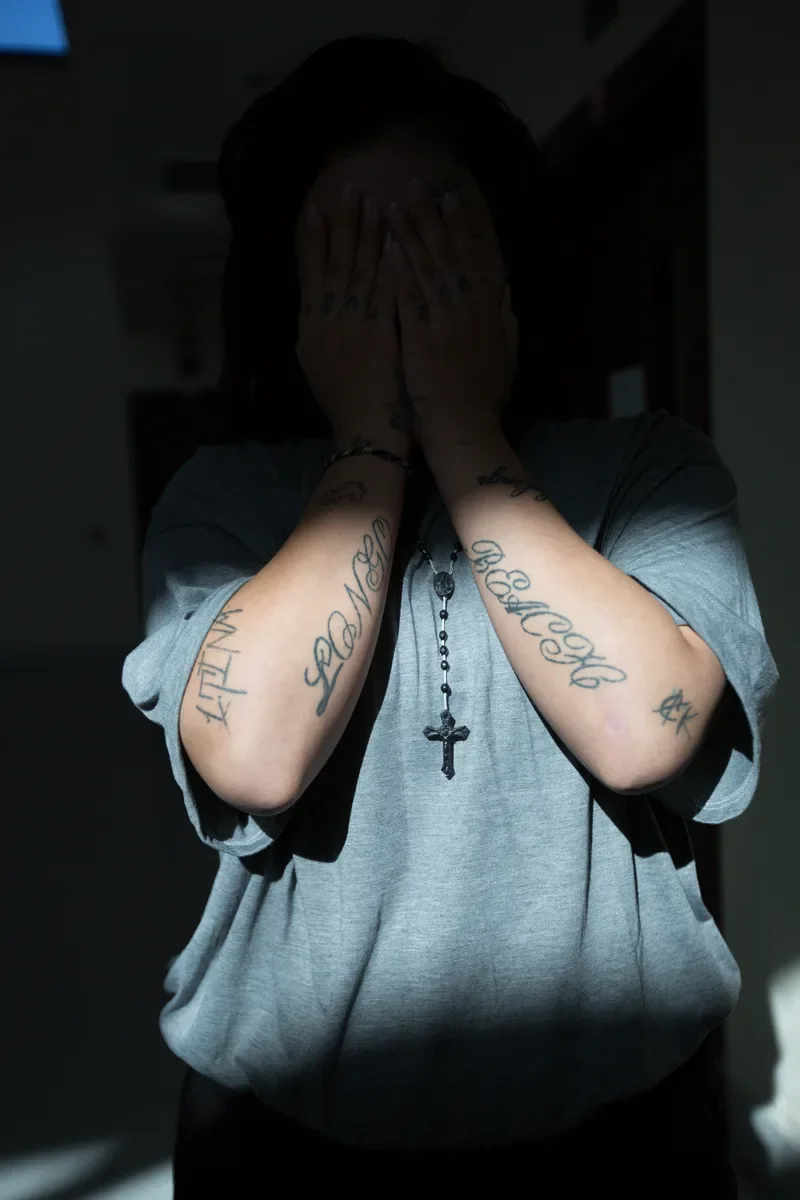
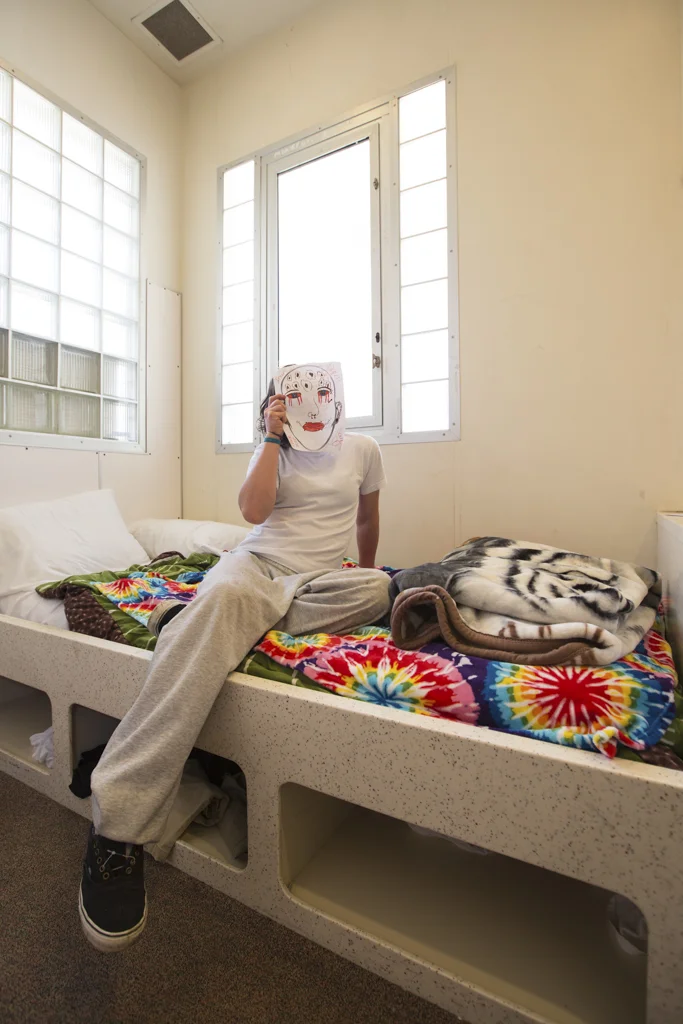
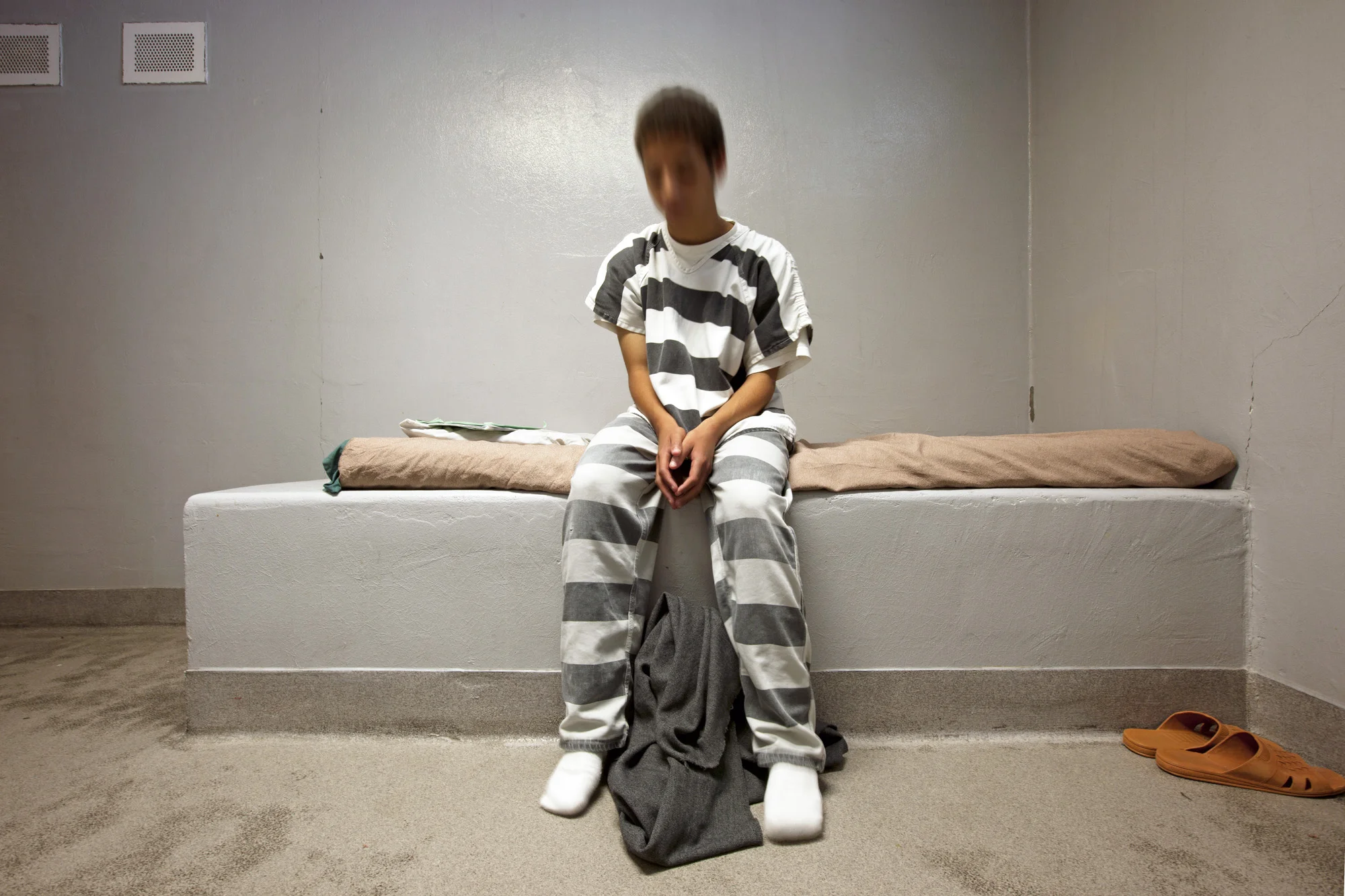
JUVENILE-IN-JUSTICE is the first book in the IN-JUSTICE Series. It documents the lived worlds of juveniles in detention, dependency, and in between, in their own words.

While Juvenile-In-Justice is no longer in print, a PDF version is available in our store.

SHARING STORIES OF LIVED EXPERIENCES IN THE CARCERAL SYSTEM

*

SHARING STORIES OF LIVED EXPERIENCES IN THE CARCERAL SYSTEM *


Untitled design (22).png

GIRLS
IN
JUSTICE

QUICK FACTS:

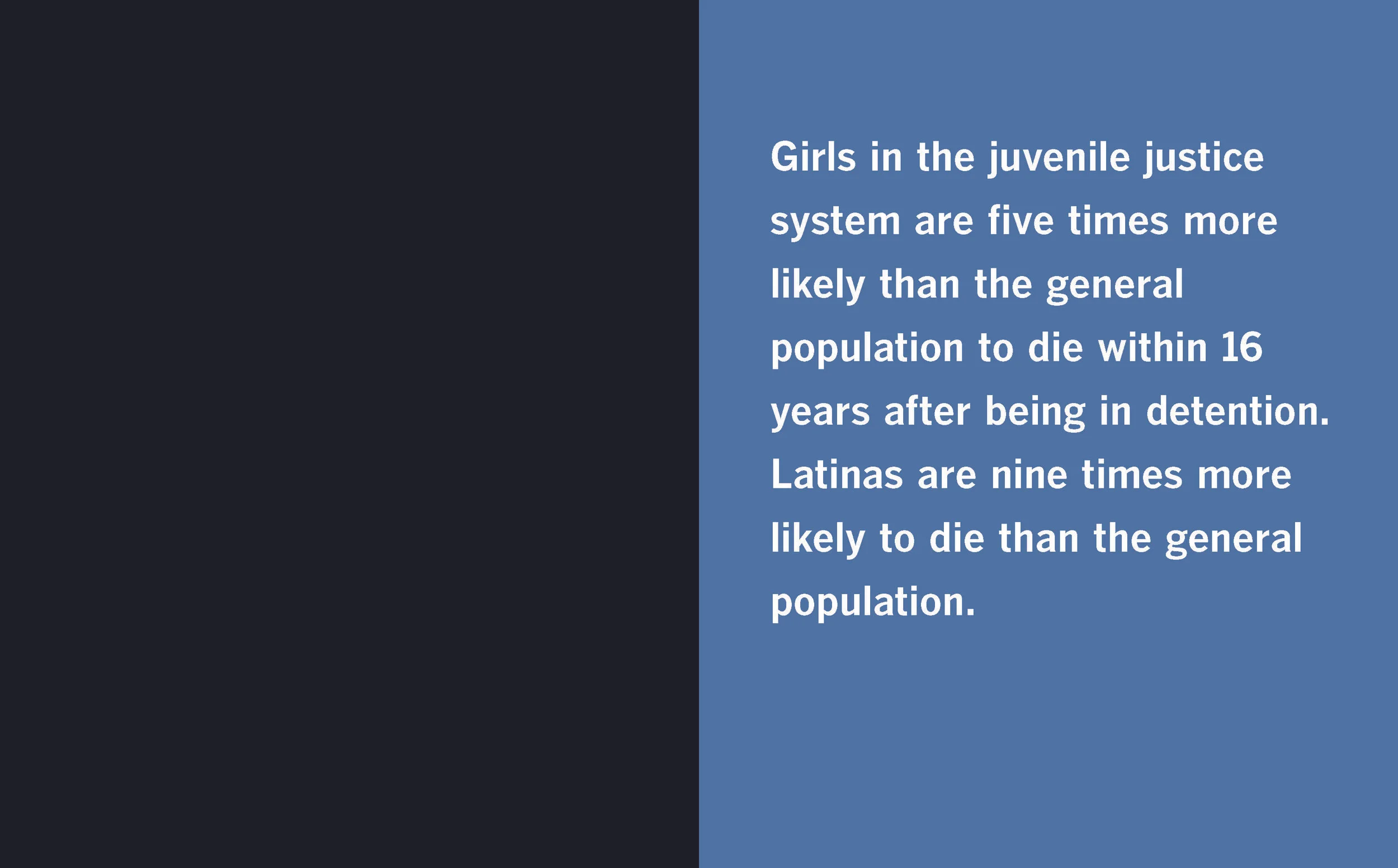
The female incarcerated population is over 7x higher than in was in 1980.

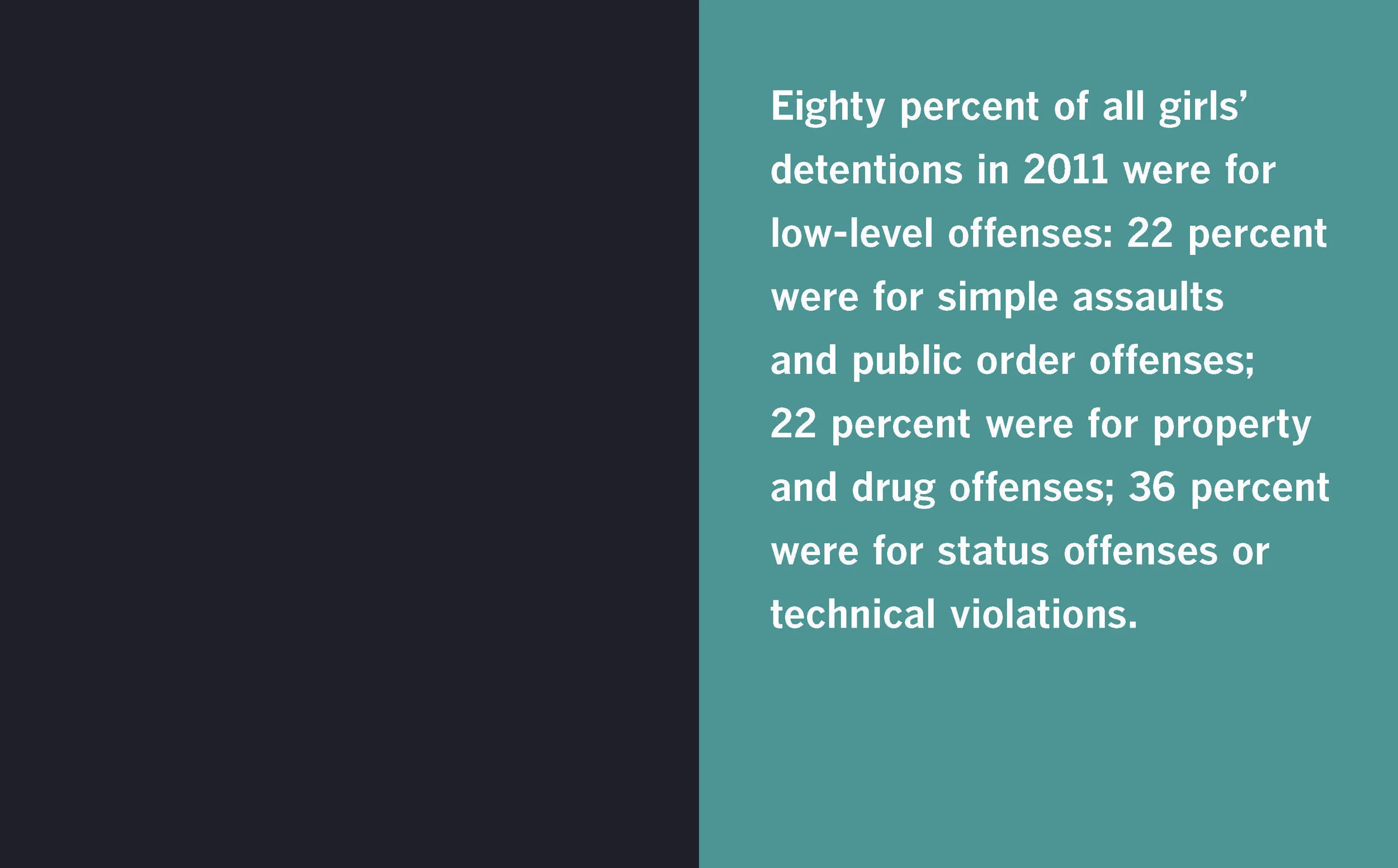
The placement rate for all girls aged 17 or younger is 11 per 100,000 girls, yet there are disproportionate impacts on different populations, with Black and Native girls much more likely to be incarcerated compared to their peers: Native girls have the highest incarceration rate, over 4x the rate of their white peers; and Black girls are also incarcerated at over 3x the rate of their white peers.

(Via: The Sentencing Project)

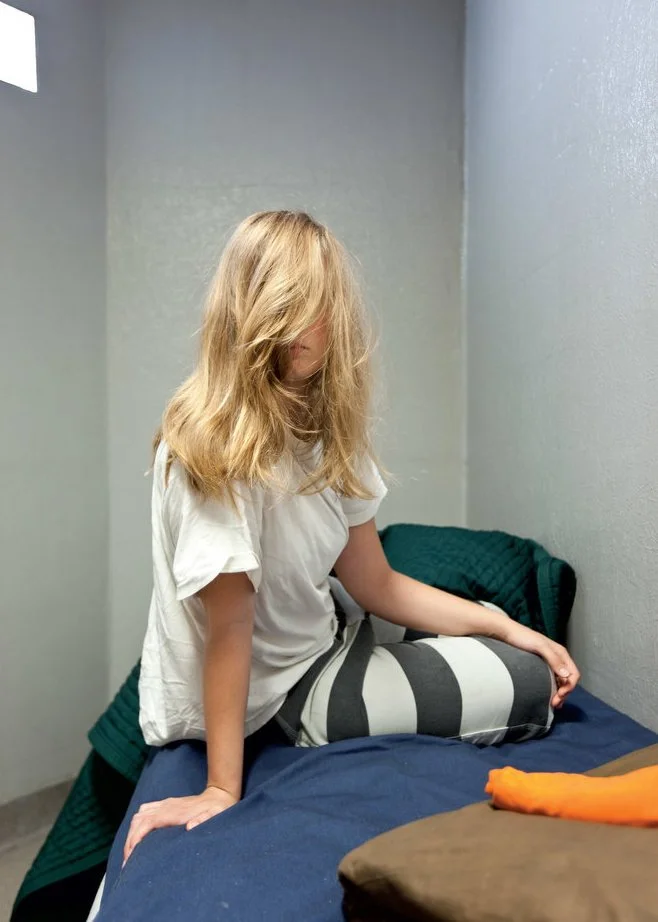
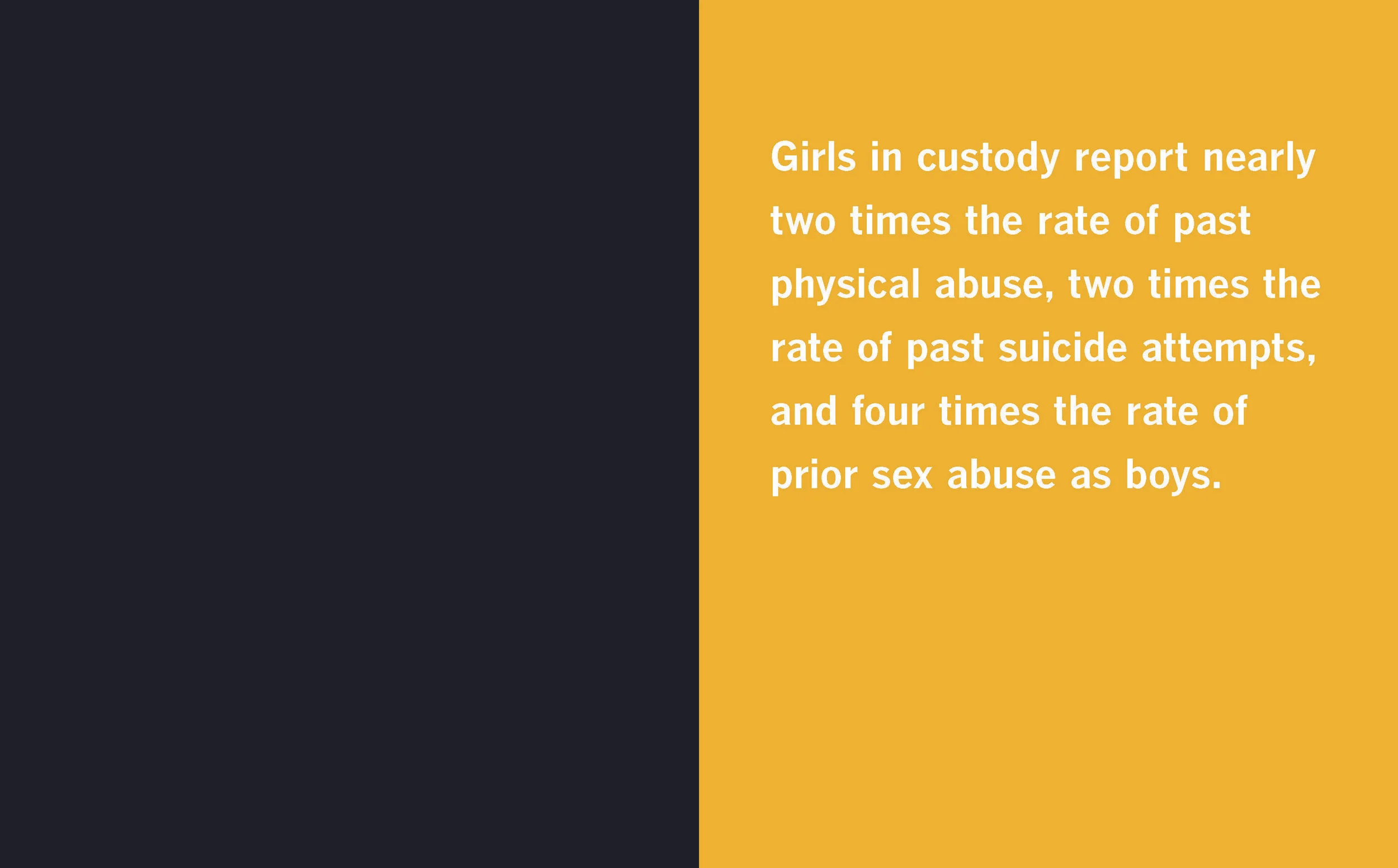
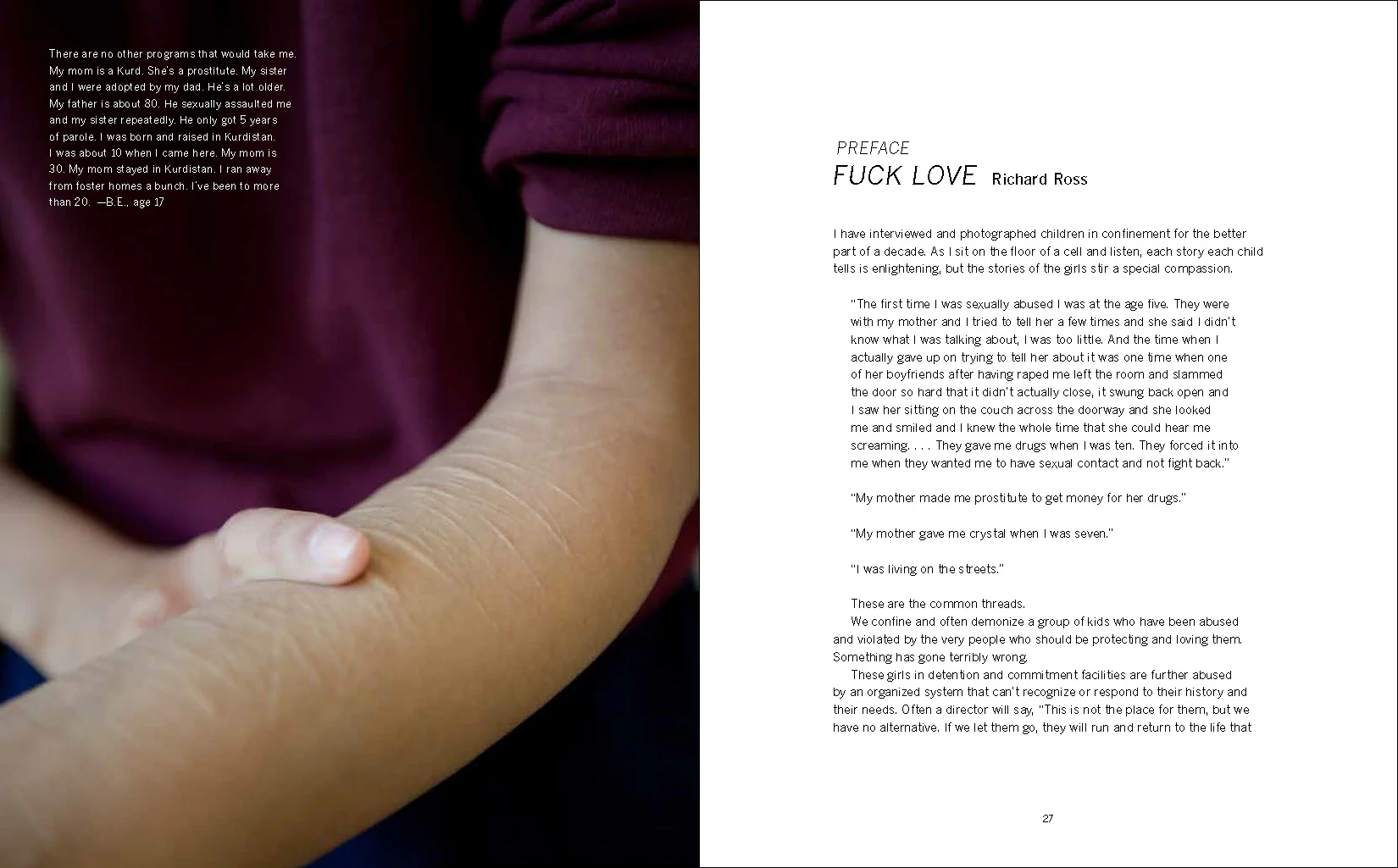
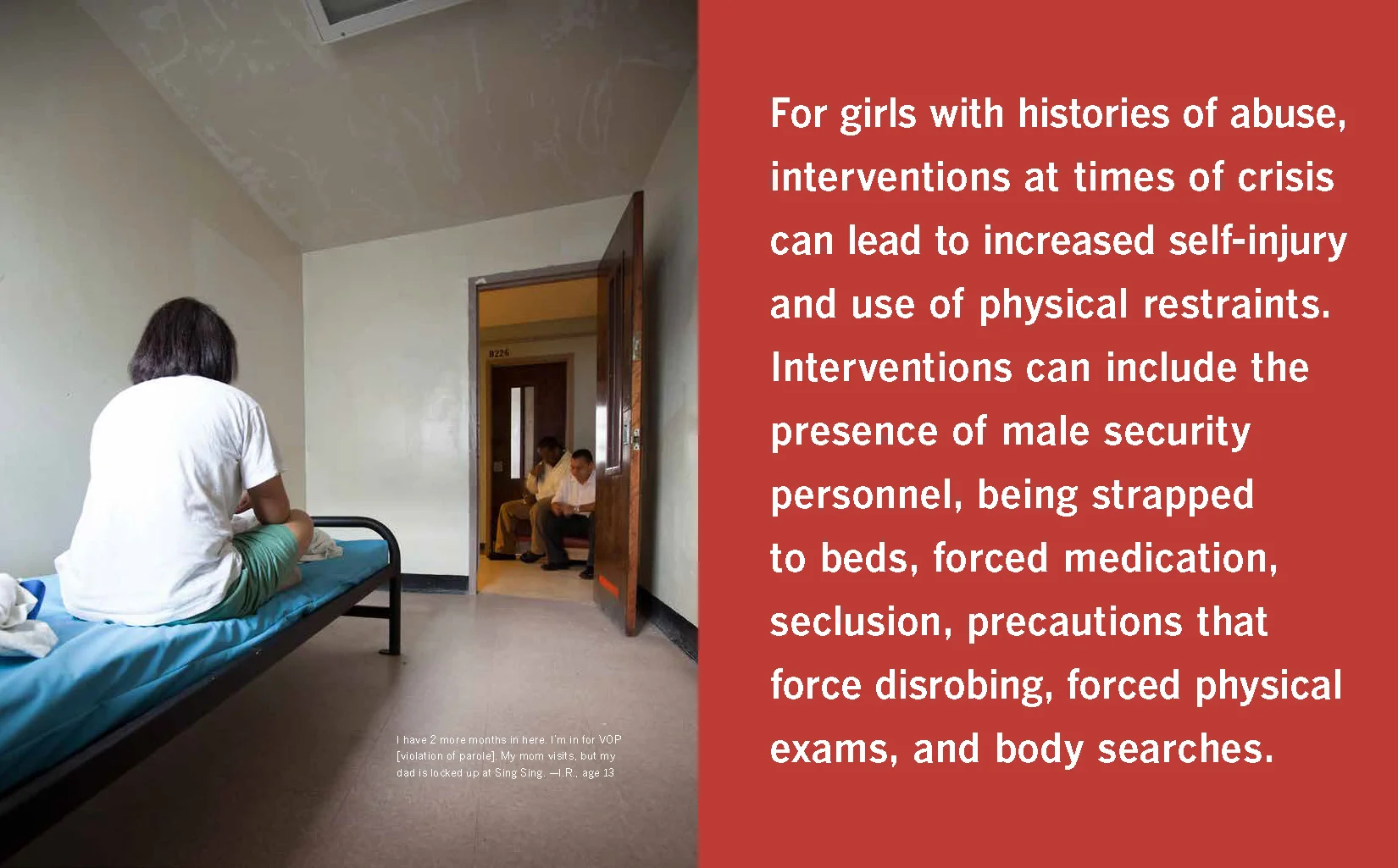
With appallingly high rates of abuse in their histories, exploitation around every corner, and a very different set of needs once ‘inside,’ girls are brought into the juvenile system by a unique set of social forces and experience incarceration much differently than boys.

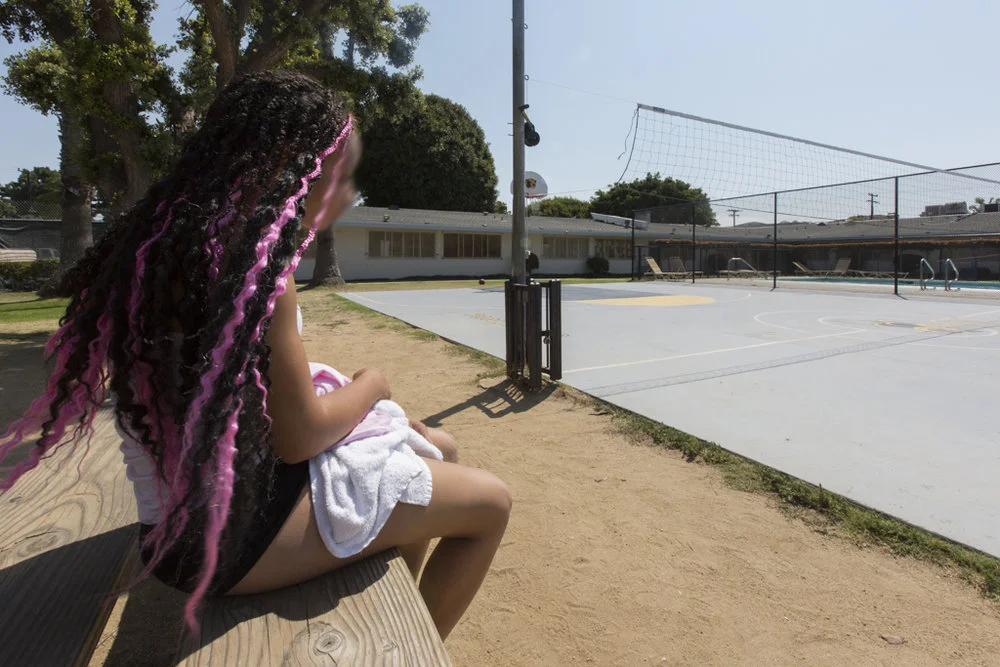
Girls-In-Justice, the follow up to Juvenile-In-Justice, turns our focus specifically to girls in the system, and not a moment too soon. While the number of youth in the juvenile justice system has steadily declined, girls are a growing share of youth arrested, detained and committed.

A rare, multidimensional look at these girls’ vulnerable lives, Girls-In-Justice speaks to the unique issues they face with both hard-hitting words and images. Essays from some of the top girls’ criminology scholars and advocates in the U.S. give readers a picture of their work with young women in the system as well as cold, hard facts about the issue.


“THEY TOOK ME FROM SCHOOL TO JUVENILE-HALL.”

Been here two months for a violation. I ran away from placement. It was a group home with 65 kids. Sometimes they would give you home passes, but I went AWOL about 15 times. I’m in 10th grade. They have me charged with battery and assault. The first time I went to placement, I was 11 for battery of a kid at school. I was in 6th grade. The police came to school and arrested me at school. The other girl had a black eye and a busted lip. They took me from school to Juvenile Hall. I called home, but I had to spend the night there. They said that I needed to realize what I did. And then they put me in placement the next day. God thinks I can do better with my life, and He knows I will. 


Below is a digital preview, the full book in print is available at our store.


JUVIE TALK

Juvie Talk is the third book of the In-Justice series. This book and accompanying website are meant to define the language used within the adult and juvenile justice systems. We hope that they can also serve as a curricular tool for a discussion of human rights, mass incarceration and the potential for children to succeed. While it is important to be able to empathize with these kids, it is also critical to realize there are multitudes of ways the words can be spoken, and even be rewritten. See here for a digital preview of the book that is available for purchase at our store.

To more directly share this experience, we have partnered with Peter Sellars to offer ideas about the nature of theater and roles. These are not specific stage directions. The final production is left to the director/teacher and student/actor. Much of the stage direction will be suggested online and include images, audio and video that can be included in any production from classroom to auditorium.


Untitled design (23).png

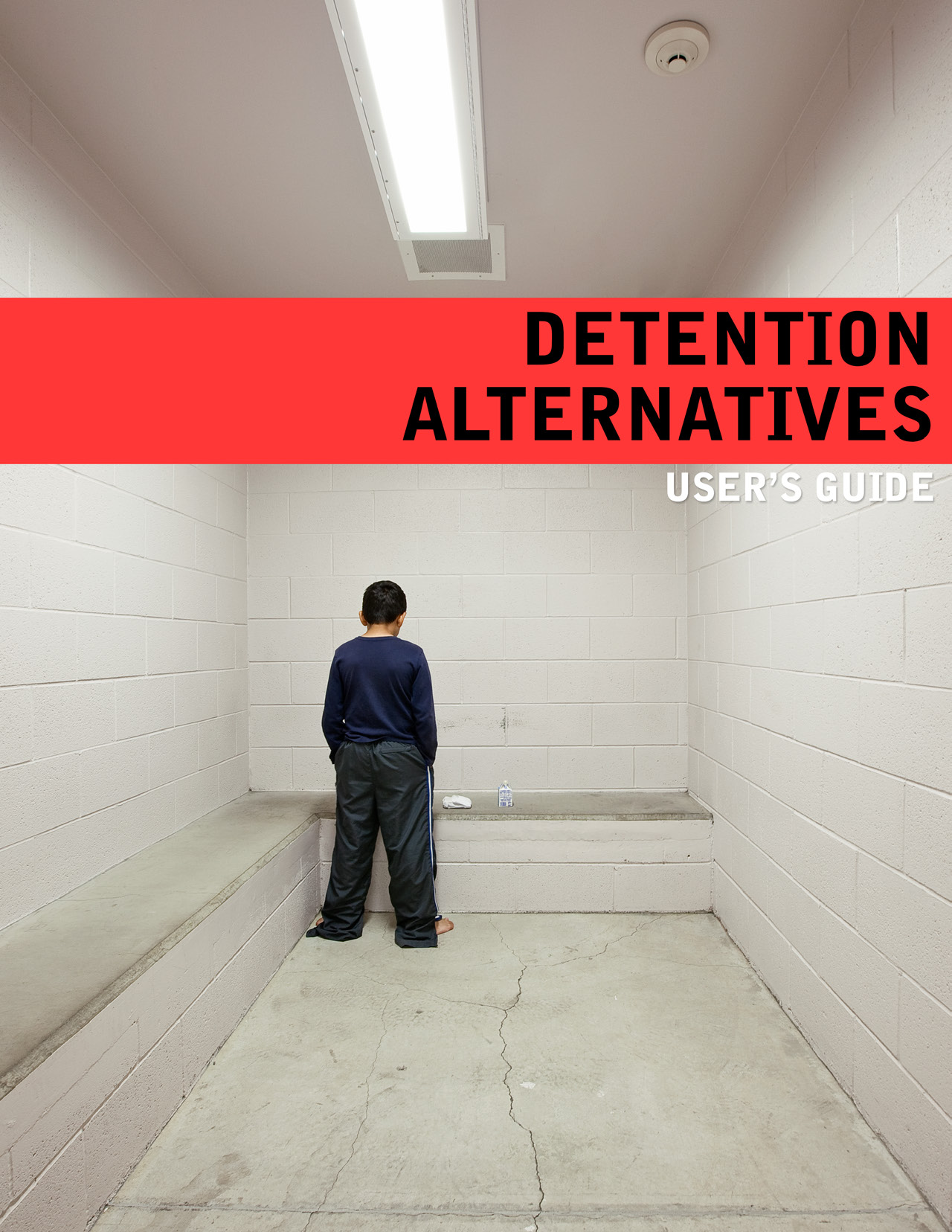
DETENTION ALTERNATIVES


Incarcerated children are still children. It is imperative that we listen to their stories in order to pursue policies and integrate practices in communities, courts, and dependency systems that better meet the needs of children, inspiring long term success, while still holding youth accountable for their actions. 

What are the tools you need to change people’s minds? In a world where social media content is abundant and often overwhelming, sometimes the best resource is more tangible, a book you can put on someone’s desk.

Detention Alternatives: A User’s Guide booklet is also available at our store.


JUVENILE LIFERS

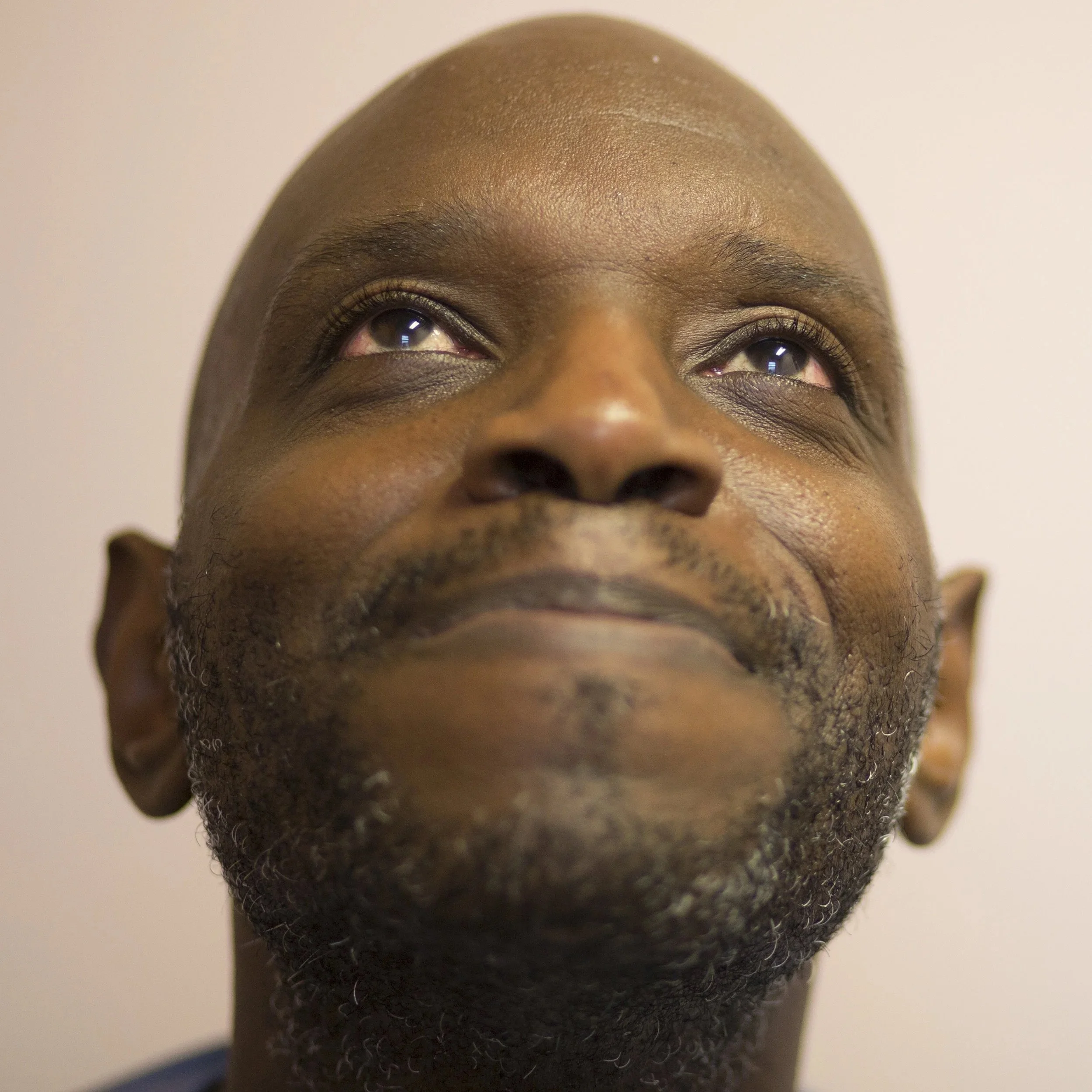
The United States stands is the only country that sentences people to life without parole for crimes committed before turning 18. At the beginning of 2020, The Sentencing Project found that there are 1,465 people serving Juvenile Life Without Parole (JLWOP) sentences across the United States. 

Twenty-six states and the District of Columbia have banned sentences of life without the possibility of parole for individuals under 18. Nine additional states have no one serving life without parole for offenses committed before age 18.

While we have made great progress, there is still urgent need for continued sentencing reform and review.  

THESE ARE THE STORIES OF AMERICA’S JUVENILE LIFERS.

SENTENCED AS KIDS TO DIE IN PRISON—NOW IN THEIR 40s, 50s, 60s, 70s AND 80s:

THEIR STORIES ARE A COMING OF AGE IN THE D.O.C. 

ANTONIO WILBURN

“I didn't know what was going on. I was just being told that I was gonna be charged. I was never there at the scene of a crime. But for some particular reason, they tucked this eyewitness, they believed Hearst testimony. I accumulated over 5,000 days for good behavior with the amount of time that I already have did, which is 20, 22 years. Anything that's available, anybody willing to give me a chance. Cause I believe you have to, society have to be forgiven and society have to give opportunities.”

geraldcheatham_portrait.jpg

GERALD CHEATHAM

My son is in prison now at Hamilton. He is doing 30 years.

Gerald Cheatham
(aka Heavy), Age 63
edwardknight.jpg

EDWARD KNIGHT

No one visits me anymore. My last visit was in 1996, twenty years ago.

Edward Knight
Age 59
jamesparrish.jpg

JAMES PARRISH

I learned to read with Louis LaMour westerns in maximum security at Florida State Prison.

James Parrish
Age 63
josephligon.jpg

JOSEPH LIGON

I came from a poor section of Philly. My father and brother were murdered.

JACK CURRIE

My sister and I raised each other. My mom drank. We were low income. I was neglected.

Jack Currie
Age 57

APRIL HENDERSON

An inmate is careless and doesn’t understand the time. I’ve been in here 23 years.

April Henderson
Age 37
johnrobertson.jpg

JOHN ROBERTSON

I never met my mother.

John Robertson
Age 62
kimberlywilliams.jpg

KIMBERLY WILLIAMS

My Daughter saw me in shackles and hated it. She hates me.

Kimberly Williams
Age 35
rogercarter.jpg

ROGER CARTER

A guy doing time is a waste. You survive for what? For nothing. I am sick and tired of being sick and tired.

chantayclark.jpg

CHANTAY CLARK

My mother was a violent alcoholic. She used me as a punching bag so I ran away.

Chantay Clark
Age 39
charlesrawls.jpg

CHARLES RAWLS

In grade 6 I used to sneak out at night and go to juke joints. At 15 I began messing around and found a gun.

Charles Rawls
Age 65

DONALD SCOTT

They can keep my body locked up, but my soul and my mind are always on the other side.

Donald Scott
Age 61

PAUL

So many of us are up for review. So few us get out.

alfonsohill.jpg

ALFONSO HILL

I was 6 or 7 when I found out that my Dad was in prison. He was killed when he got out. He was stabbed.

Alfonso Hill
Age 61
leonardbass.jpg

LEONARD BASS

My life fell apart because I didn’t have a support system. I’m going to die here. I am under no illusions.

Leonard Bass
Age 53
robertsaunders.jpg

ROBERT SAUNDERS

It has been 43 years that I have not seen my family. Just give me the death penalty. I am never getting out of prison. I am going to die here. This is slavery.

Robert Saunders
Age 58

WESLEY JOHNSON

I’m here for the rest of my life. I have no visitors. Christmas means nothing to me.

Wesley Johnson
Age 60
dwightbryant.jpg

DWIGHT BRYANT

I understand that and accept that, but at some point you have to stop spanking that kid, it becomes abuse if you do it too much.

Dwight Bryant
Age 67
edwardleonmarciel.jpg

Violence was something normalized growing up and I owe society an apology.

Edward Leon Marciel, Age 44

leedaniels.jpg

It was easier to do wring than do right. The more wrong I did, the more my friends accepted and respected me. They were the wrong friends. They were criminals.

Lee Daniels, Age 55

lestersimmons.jpg

LESTER SIMMONS

At 15 I was put in an adult facility, I was raped and sodomized.

Lester Simmons
Age 65
davidkuns.jpg

DAVID KUNS

At 17 I lived with my mother and her common law husband. He molested both his stepdaughter and his own daughter.

jerrylorenzosimon.jpg

JERRY SIMON

At 15 they placed me in confinement. I was there for months, 24 hours a day.

charleskeech.jpg

CHARLES KEECH

I understand people don’t want to release me, I can’t change what I did. I would like to get out, but it depends on the grace of others.

Charles Keech
Age 60
vincentgodfrey.jpg

VINCENT GODFREY

I have never known a successful family, never had a job or earned a paycheck. I only knew the streets and a series of juvenile halls, camps and group homes.

terrencegraham.jpg

TERRENCE GRAHAM

I grew up with two crack addicted parents. At home there was only Doritos and spoiled milk or government cheese in the refrigerator.

Terrence Graham
Age 30
bernard_flowers.jpg

BERNARD FLOWERS

My mother was 13 when she had her first kid. When I came here I couldn’t read or write.

Bernard Flowers
Age 62
garyreid.jpg

GARY REID

If I could start over I would, but I can’t. I deserve another chance.

Gary Reid
Age 54

MARCOS MENDEZ

My dad passed away when I was 5. I was 16 when I was convicted.

luisguerrero.jpg

LUIS GUERRERO

I didn’t understand the concept of family. It was always poverty, and yet somehow I felt loved.

gregoates.jpg

GREG OATES

I was 18 years old when I was arrested for a crime of murder I committed when I was 17. I’ve now served over 40 years straight.

CS.jpg

C.S.

I grew up differently than you. I grew up in a world of violence.

derrick_griffin.jpg

DERRICK GRIFFIN

I ain’t giving up hope though, by a long shot. I’m not giving up at all. I’ve been fighting all these years and I’m not going to stop.

Derrick Griffin
Age 46
charlescopley.jpg

CHARLES COPLEY

At 16 I went to prison, an adult prison, and I felt as though why couldn’t I get probation? Why couldn’t I go to a juvenile home or something? Why I had to go to prison?

DD.jpg

D.D.

When I came in I was 15. I was sentenced to 90 years to life.

 
jamesstidhum.jpg

JAMES STIDHAM

Here I am, 35 years later, 50 years old, for something that I did as a child.

James Stidham
Age 50
robertmartin.jpg

ROBERT MARTIN

I’m the only one missing. I’m the only one trying to obtain privilege of a family.

irvinlandry.jpg

IRVIN LANDRY

The cause of it all was my brother was shot and I went seeking revenge.

Irvin Landry
Age 42

Untitled design (24).png

JUVENILE
IN
DEPENDENCE


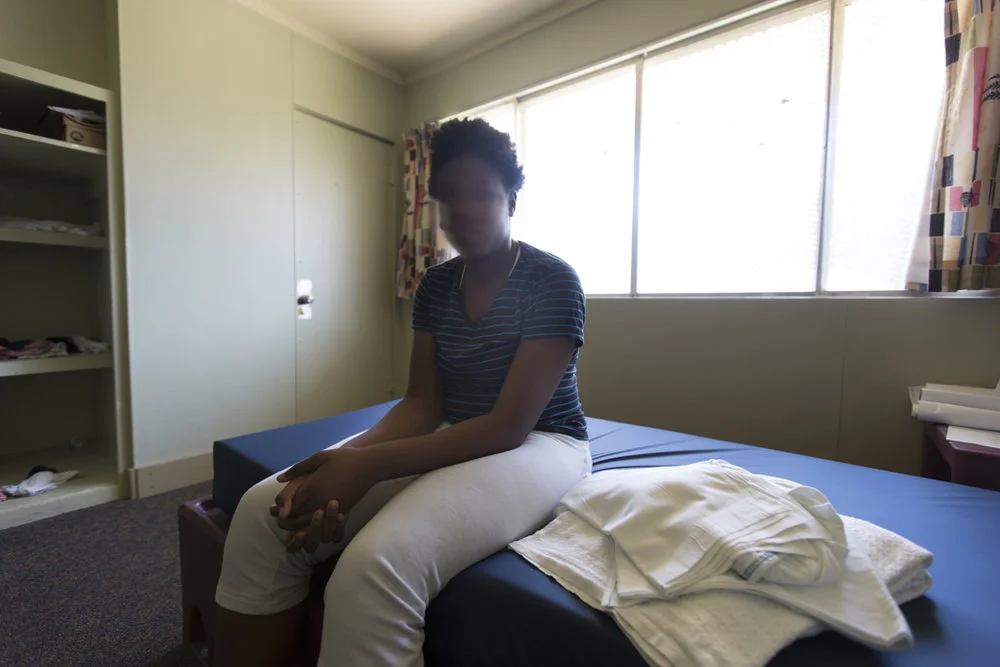
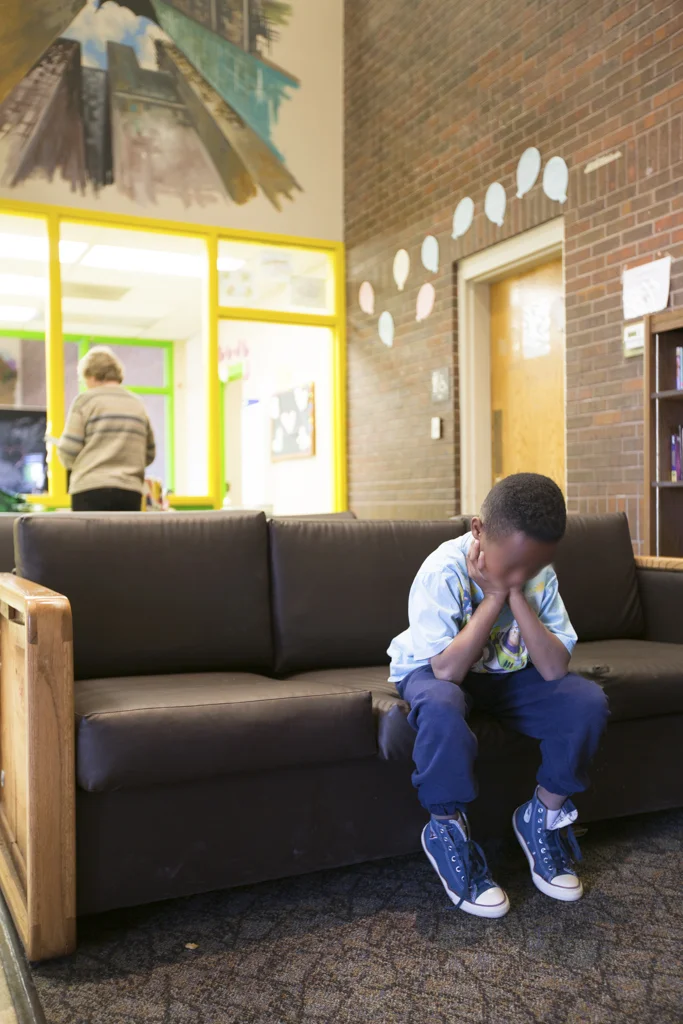
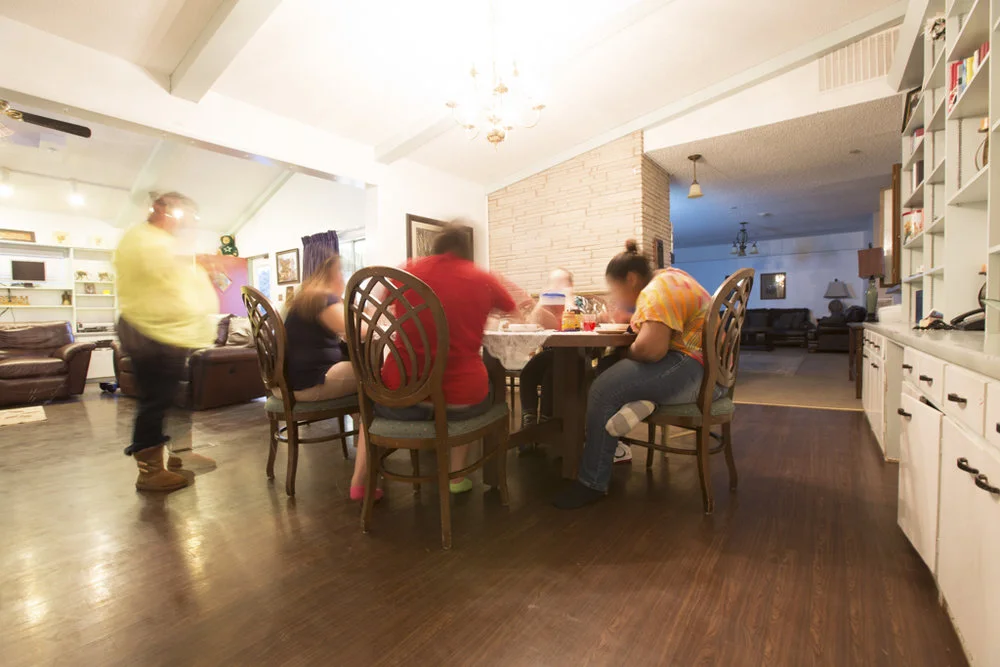
The foster care and detention systems are interwoven. Dependence or detention, these kids often all come from the same world of trauma, poverty, abuse, and neglect. Kids in detention are in the water, while kids in the dependence system stand on the edge of the pool. Some kids are in the shallows, while others are in the deep end of the system.

In both the foster and detention systems, children experience a range of needs, and there are an array of facilities and services in place to get them in the right place to best meet those needs.

These are our children and they are yearning for intervention, appropriate placement, and support critical to their success.


My foster mom used to do things that my real mom used to do. I hate my real mom. I really. Don't. Like. Her. I would have to endure things. Emotionally. Mentally. Physically. Food was on the table sometimes. Was there a safe place to sleep? Sometimes, maybe 30 percent. I got all 52 cards in my deck, but I know the way I treat people is affected by certain things in my childhood. Sexual abuse? Yea my brother did some stuff. It happened. My stepdad and my mom were fighting too. He was making her bleed. He threatened to kill her. There was a lot of aggression in the house. And they both hit me but here with Ms. xxxx it’s different. I love her to death. Something is wrong and she’ll say I don't feel you on that. I don't dig how you handle the situation.

I’m smart, I just spoke to a few young people; I give them advice on certain situations. Maybe I’m not emotional. My oldest brother got killed, I didn't cry. I just said to myself, this is his day it’s not my day. That's what you learn when you’re from the hood. I’m starting to let people try to get close to me but it’s kind of hard. I’m doing okay. Not too great but not too bad. I’m in tenth grade and I’m on honor roll. I’m real popular, people flock to me. I do my own cooking; I love cooking breakfast, baking and stuff. In six or seven months I can sign out of the system. I can stay with my foster mom past 18 if I want to. But I think I’m gonna take independent living classes. I don't know what they’ll teach me. I could take care of myself when I was 7 years old. What 7 year-old do you know like that?

 
“ I got all 52 cards in my deck, but I know the way I treat people is affected by certain things in my childhood.”
E.O.
Age 17

I’m from Lynwood. I’m in 9th grade. I came in at 11 p.m. last night. A social worker came to my house and took me. My stepdad and mom live there, but they weren’t there. They left me alone. They were out looking for places to live. I haven’t been in a foster home. I haven’t been in a group home. They said my mom and stepdad physically abused me. They examined me across the street at the hospital, but they didn’t find any marks. I think they are going to put me in a foster home for a few days and then to my grandma’s. It’s boring here. The tag on my wrist is for a medical alert that I use an inhaler. I have asthma. Can you send me a picture? I don’t know what my address will be.

Youth Welcome Center

“They left me alone. They were out looking for places to live.”

S.V.
Age 13

I’ve been here a month. I have a brother whose name is U or something like that. I’m not sure. My daddy wasn’t around. I saw him once when I was 11. I don’t know what part of xxxx I’m from. When I was born my godmother took me until I was four. When I was four, my mother took me back from five to nine. Then I was taken away into the system. My mom abused me. A teacher saw the bruises all over me and reported her. I went to a nice foster home. My foster mom abused me.

Then I went to my godmother until I was 11. I was acting up so they sent me to a foster home when I was 12. Then back to a group home for two months. It wasn’t successful. I messed up the house and wrote on the walls. All the girls in one home went to another home with all boys to play soccer and I went AWOL. I just sat down in the middle of the street so they took me here. I’m voluntarily here. I had a dependency court date last month.

Adolescent Mental Health Facility

“I was acting up so they sent me to a foster home when I was 12. Then back to a group home for two months.

It wasn’t successful.”

M.E.
Age 13

Youth Welcome Center

I live with my mom, just my mom. DCFS took me out of my house for smoking marijuana with my mom. They said it was an unsafe environment. I was in a foster home for a few hours, but I didn’t like it and I wanted to go home so I left. Police picked me up on the side of the freeway and brought me here. I came in this morning. First thing they did was take me across the street to the hospital. My mom wasn’t doing anything wrong. I haven’t been in trouble before.

J.L.
Age 17

“Police picked me up on the side of the freeway and brought me here.”

Adolescent Mental Health Facility

Around eleven I went to County Extended Care. I was running away so much. I was roaming the streets, living in parked cars or under cars. This was all when I was age 11. After, they sent me to another facility. I kept on stealing and breaking things. I was angry. Then they sent me to juvie for a while. But they couldn’t keep me inside because. I am a ward of the state. At 12/13 I was sent back. Then they sent me to Colorado because they thought if they sent me far enough away I wouldn’t run. When I ran I would go to my biological mom. I found her and my grandmother. They would call the cops and send me back to my stepmom. They didn’t want me. I have mental issues. They sent me to state mental hospital for multiple suicide attempts.

My father was sexually abusive. When I ran away I was really sexually abused. I ran with one of the girls from the group home. She took me to a really bad place. I was thirteen and people did horrible things to me. I was hospitalized at least 10 times. Then they brought me here. When something goes wrong and men try to restrain me it makes me violent and I try and assault them. I can’t stand men holding me down against my will. I also ran away—I jumped over the fence. I’m a very open person.

Everything I ever had has been taken from me and I had nothing to start with so I have nothing to loose by being open. It’s easy for me to smile and laugh but I’m angry on the inside.

N.R., Age 14.


Adolescent Mental Health Facility

I’ve been here three years. My mom doesn’t visit—she’s on crack and heroin. My dad is a sex offender and there is an order that he can’t see me. It was between about 6 and 12 when he abused me. I told a social worker and they took me to a foster home when I was 7. My stepmom was married to my dad. She had a daughter who is my half-sister.

I lived with her from when I was 7 to 10—then they got rid of me. I started using drugs when I was 10. I got them from friends. I didn’t go to school. I never went to school. I ended up in another foster home for two weeks and there I drank bleach.

E.L., Age 16

Adolescent Mental Health Center

They took me from my home when I was 10. A social worker from CPS took me to a foster home and separated me from my home, my brothers and sisters. I don’t do drugs. I see what it did to my mom and I know how it affects people. I don’t want to be part of that system.

I tried family therapy, but it all revolves around my father. My mother doesn’t like him. He used to come and see me a lot, but hasn’t for the last 3 months. I used to go AWOL and go to my grandpa’s house. They have to restrain me a lot because I attack people. When they restrain me they hold both your arms and put you on the ground. It happens less than it used to happen.

K.H., Age 14

Transgender girl in Adolescent Mental Health Center

I’m a Dual Custody kid, 241.1. I came into the system when I was 15. My Mom was on drugs. Meth. She gets SSI and Welfare. I’m in the 11th grade. A social worker popped up at my house one day. It was as simple as that. There she was. I had run away and they found out I was trying to kill myself.

The cops picked me up and put me in handcuffs. I was kicked out of a few foster homes mostly for being disrespectful and defiant. But I gave back what I got. I’ve have been here 9 months. I trust nobody. I have very few friends. They have to earn my friendship and trust. Most of my friends are gay. There is a pretty big transgender population in the valley. Was I abused? I don’t even want to say what.

L.T., Age 16


I was four months old when I first came into the system. 

My mom didn’t have a house; she lost it. I’m here with my sister, but my sister’s now with a foster family. If it works out, she gets to stay. But she told me it's not gonna work out, and she’ll be back to see me.

My dad lives on a farm. I was with him there for a while, but my dad’s cousin lived there, and I didn’t want to be with his cousin. My mom cleans bathrooms at the Body Works store.

I’m in 5th grade

D.D., Age 11


I’m going to the hospital again. They have medical staff here but I like the hospital. My mother was adopted. I use drugs, meth. My mom’s in jail. Don’t know my dad. My mom was arrested so I went to my mom’s friends house. When DHS started looking for me they went to the friend’s house.

They had warrants on them…and they found drugs in the house. Later in the day gunshots were fired at the house. There was a guy in the front yard shooting. He came back into the house and then they found me in there and took me to the shelter. I was supposed to be doing online school. This is my first time here.

E.E., Age 14

Shelter

“When I went home the police was at my house and they took me and my sister.”

I’ve been here 15 days. I was at school, and then I checked out early. When I went home the police was at my house and they took me and my sister. She’s 13. We were at my aunt’s house for a while. I don’t like it here. I want to go home.

U.E., Age 6

U.E., Age 6
Shelter

“I don’t know why I’m here. I didn't like foster care. I’m in first grade.”

M.N., Age 7
Dependency Facility / ACS Recommendations

I was always looking for a fight. I was getting in fist fights with my father.

R.P.
Age 14

I’m almost 14. I’ve been here mostly a year. I was living at home with my grandma. I had trouble with my mother and father. My grandma couldn’t get full custody. I was always looking for a fight. I was getting in fist fights with my father. My mother when to ACS to ask for help. We couldn’t get family counseling because my parents didn’t want to go. I have three brothers, eight-year-old twins and an 18-year-old. My dad works for sanitation.

My mother is a teaching assistant. I’m trying to see if I can get myself discharged to my grandma. I’d like her to get full custody. Someone on the staff gave me this t-shirt. The rec staff taught me how to mix and to DJ. They showed me everything they know. I’m in 9th grade, special ed. There’s no real drugs and alcohol at home, just fighting. There’s a music program but not a lot of instruments. Rap. That’s about it. Food’s good. I get home visits to grandma and occasionally my parents.

“She said I had a knife and attacked her. So they had about eight cops and called like a SWAT team. I was in eighth grade, like 12 or 13 years old. I never had a knife. She lied.”

I max out of here when I am 21. I lived with my mom and two brothers and two sisters. Sometimes there is no food in the house. There are lots of roaches though. There is no stability, no structure there. No dad in the house. I started off in school. I ran amok in school. I wouldn’t pay attention and I bullied kids. They moved me from a regular school. I didn’t realize they had me in a special-ed school until I was in 7th or 8th grade. When I was in 5th grade I was in a shelter with my dad. We had moved.

I reconnected with my mom. I tried to have warm feelings for her. I was frustrated and ended up slapping flames at my stepmother. She called the cops. I locked the door. She said I had a knife and attacked her. So they had about eight cops and called like a SWAT team. I was in eighth grade, like 12 or 13 years old. I never had a knife. She lied. They put me in a hospital. Mom got custody of me but she was in a shelter.

F.N., Age 18.


Boys Group Home

A non-profit family service. XXXX Boys Cooperative. Down a dirt road about ½ hour from downtown. It gives kids a real life living situation. Each kid has his own room, but they are very small. The bed is often in a section that is about the length of the bed. There are seven boys from 12- 17 or 18. Mr. XXXX is the director.

I’ve been here over a year. I was in custody with my sister who is 21. My Mom is deceased. I don’t know how. I was in Mississippi. She didn’t have no resources to take care of me. It wasn’t the right time or money for her to take care of me. I have a brother in xxxx with a foster mom.

I also have a younger brother and sister who live with my older sister. I’m in 8th grade…middle school. I go to school up toward Atlanta, only about five minutes up the road.

E.B., Age 15

“ I guess I can be anywhere as long as I got a roof and some food. I don’t need someone to love me, I can love myself.”

I was in Memphis until I was 14. I lived with my auntie and my cousins and his sister. Then I moved in with my sister. My Mom is in a health facility. I don’t know what for but she has been there for a long time. I went with my aunt when I was five. I never knew my dad.

I was 14 when we went to Atlanta. My Auntie drove me to Atlanta and I thought she was going to work or something. All of a sudden I was living with my sister who was 31. I didn’t like her.

K.I., Age 16

“My Mom is in a health facility. I don’t know what for but she has been there for a long time. ”

Girls Group Home

A non-profit family service. Women and their children only.

“I’m the oldest here. I can be here until I am 21. I can sign myself in when I am 21 for six months. I know how to be independent. I definitely don’t have a boyfriend. I have a girlfriend. There are a lot of girls sleeping with girls in xxxx.
”
— S.S., Age 20 and C.R., Age 3
“I wasn’t angry—I was hurt more than anything.”

DFCS was mailing my SSI check to my grandma. One day I got out of school early and I saw my check that my grandma was cashing. I just wanted a part of it. We got over that argument. We regularly used to fuss and fight. I thought she was playing favorites toward my brother, but as I grew up I realized she was doing what was right for me. I wasn’t angry—I was hurt more than anything. I was hurting for both of us. I was hardheaded and young. I did a lot of damage to myself. 

I hung out with the wrong people. I just wanted to be grown up when I was 14 or 13. I really thought I would be everything. I have the director on my speed dial. I have trust issues. I only trust myself. I am going to Job Corps, studying culinary arts. I have boyfriends, but no sleepovers. I go home every weekend and every holiday. I resolved a lot with my Aunt and Grandma.

S.A., Age 18

 
“This is the best place for me. I will go to college”

My adopted grandfather made sexual advances to me. They are not really my grandma and grandpa. They are friends of my family, but they are older so I call them grandma and grandpa. They are not really family. This is the best place for me. I will go to college. I want to attend xxxx University to study anatomy and be a doctor.

I violated probation this summer—curfew violation. I was in the detention system. They put me in xxxx Detention Center for two weeks. I don’t trust anybody.

S.U., Age 17 and K.K., Age 8 months

“I was five when I came to the US. I was kidnapped at five by my mom’s best friend. ”

I’m here until 21. August is my “graduation.” I was 5 when I came to the US. I was kidnapped at 5 by my mom’s best friend. I was going to school when she came to take me away with her husband and they took me to the U.S. Everything was OK until I was older and she started beating me. Her husband was nice but she would get mad. My little boy is 4. I want to get my GED. I want to study cosmetology. I don’t know where my parents are. I never had contact with my parents after I was taken from them.

The people that kidnapped me fled and were never apprehended. They made me dance at a strip club since I was 13. They never asked or looked for my papers. They told them that I was 18. I had a fake ID. I had to dance for money and do other things. When they fled, I went into foster care. I didn’t know anybody. I was 16 when I went into the foster care system.

N.T., Age 20


Adolescent Mental Health Centers

Mental Health centers often deal with dual custody cases within dependency and detention. A child can be placed in either treatment programs, emergency shelters and a variety of other combinations.

“We follow the guidelines established by Community Care Licensing and our Program Statement. A nurse is there every time monitoring and determining the need to continue or discontinue. The goal always is to express expectations with the child and if they comply, the seclusion/restraint ends. We then do an incident debriefing with child and staff to see what can be learned and or improved upon.” - Clinical Director

J.V., Age 15

Inpatient Adolescent Treatment Facility Ages 12-17

If I had a perfect home? It would be with my Mom, with no violence, no cussing or hitting my mom anymore. I would have my dad back from prison — he’s in for murder.

-D.K., age 16


“My dad abused alcohol, abused drugs and abused me. ”

My full name is named after someone in the bible. I’ve been here six weeks. I’ve been in this room for fifteen minutes. I think it is time for me to come out. It is just a place where I can quiet down. Before this, I was at xxxx—another level 14…but not a lock-down. I was there for a year and a half but I kept getting hospitalized for hurting myself. I was born in xxxx, Tennessee. My parents lived in xxxx, but they wanted to have a kid in another state so they selected Tennessee. They bought a house there but it burned down.

Before xxxx, I was at xxxx. My mom visited me there. My dad abused alcohol, abused drugs and abused me. He raped me when I was 7 and kept doing it until I was 15. The neighbors finally heard me screaming and called the police. He never went to jail because he said I was lying. They took me to DCFS headquarters and then I was in a group homes ever since.

M.A., Age 16


Adolescent Mental Health Facility

I was restrained and strapped to a bed in the middle of a room. They strapped down my arms and legs.

I was restrained and strapped to a bed in the middle of a room. They strapped down my arms and legs. They sent me to xxxx’s for 30 days, the 21 days the second time then the full 33. Then they sent me to a group home xxxx for four weeks in xxxx. I started cutting with a broken plastic fork. They called EMQ, Emergency Quick Response team. At night, I would cut with a pencil. I did things like walk out of the group home, with a counselor following me… so I wasn’t trying to run away. I just wanted to cool off. She was calling the police on her cell so I slapped it away so they said I was assaultive.

 The cops descended—about four of them, all men. They flipped me over and handcuffed me.

I was at a group home in xxxx, then another group home called xxxx’s house in xxxx, for two weeks. I was being unsafe, punching the wall and hitting my head against the wall. I kept running from xxxx’s, it was not a locked facility so they have me here now. They give me Seroquel, Propanol, Depakote. When I was first hospitalized I was in middle school. I would AWOL from there a lot.

M.C.T., Age 13


“I tried to kill myself with a knife. ”

I’m wearing a tee-shirt that has the pillars of our SCF program: responsibility, fairness, citizenship. I tried to kill myself with a knife. We get therapy like three times a week. A perfect house? Everyone is getting along, working together to keep the house clean.

Nice meals, Family night. We would go out to places and enjoy ourselves. Supporting one another. Now I live with my Mom, Dad, six brothers, one sister two German shepherds and two miniature poodles. My brother and sister work also to help the family. They are still single.

G.N., age 17


Dual Custody Detention/ Dependency

I don’t read, don’t watch TV. I sit in the cell. I eat in the cell.

Been here for a week. I’m in the observation room. I go to class in the morning and then come back to my room; I don’t read, don’t watch TV. I sit in the cell. I eat in the cell. I was supposed to come home today, but my Aunt didn’t come. I can’t live with my mother. I can’t live with my father. I’ve been here three times before.

I didn’t tell my aunt that I am here (she has to be notified). This is the longest. My aunt doesn’t visit….she is never sure when the visiting days are.

G.R., Age 14


Group Home

Capacity: 10, only girls, ages 13-18, run with DHS.

Level D (one level away from lockdown).

Most girls come from failed foster care placements.

T.P., Age 17

“ My baby was 8 months and he was delivered stillborn. I lost the others at 6 months and 5 months. ”

My mom would send druggies to my room to pay for her meth. She said I wasn’t prostituting, but a lot of times my door would be open when these men would be with me, and she would be in the other room but watching me through the door. And then I would run away and I would be prostituting to get money for food and for my brother. I became pregnant but I lost the babies 3 times. And then I also nursed my younger sisters. I had a lot of drug exposure. They gave me meth and other stuff at 12 and younger. I would be snorting and smoking. I quit cold turkey—I didn’t want to be like them. I didn’t want to be like none of my family. I want to go to college and support myself. My brother’s in a shelter in xxxx, the girls are in foster home in xxxx.

There’s no talking to my parents or grandparents. I’ve had a few sane dating experiences. I think that I’ll eventually end up with a woman. I find it hard to trust men these days.  I’m really against abortion. I lost three babies. My oldest little sister rammed me in the side with a screwdriver. My baby was 8 months and he was delivered stillborn. I lost the others at 6 months and 5 months. I had to bury them in the backyard because nobody knew about it. I never got medical attention. They all attributed my weight gain to depression. I want to have a lot of kids. I want to have 2 of them naturally and then adopt a lot.

G.B., Age 17

Group Home

But I’m preparing myself to not be in danger when I get out of here, and I don’t want to be part of the trouble in here.

Both me and my brother went to xxxx to another foster home and an old woman named Ms. xxxx and we lived with her. And then we moved because of the abusing going on in the house. She threw me on the bed and I can’t remember where we went next—and she pulled my hair. I have a sister, she lives with a friend because she’s 17 years old. It’s her girlfriend. My sister and I had an incident with a boy; he was my first true love and she ended up sleeping with him. I did forgave her. She shouldn’t have done that. She was the dumb one. It wasn’t just her it was him too. I’m starting to do visits.

The visits are supervised. Like one visit we went to McDonald’s. My mom is bisexual. So is my sister. She doesn’t do drugs but she smokes cigarettes and does alcohol. Miss xxxx is getting on my case here. Kids bully me and call me diaper booty. It means that your booty looks like you have a diaper on. They also called me a snitch. But I’m preparing myself to not be in danger when I get out of here, and I don’t want to be part of the trouble in here. This hope necklace, its just a necklace I bought from a store.

M.M., Age 14

“They came and took me from daycare when my mom was at work.”

My mom and my stepdad would be hitting and yelling at each other. Then I got brought into the shelter with my siblings. The police brought me in. I came in in a police car. They came and took me from daycare when my mom was at work. For a few months I was in a foster home in Luther.

Then I was threatened by other kids, but they thought I was threatening them. Then I went to my stepdad’s brother’s family for half a year. Then they took me to another shelter, but they didn’t want me because they said I was abusing their little children.

K.U., Age 14

FIRST ARRESTS


FIRST ARRESTS documents the human stories of where it all begins; the first contact with policing and the justice system. These early encounters define relationships with, and understanding of, policing and the criminal justice system.

Between 2013 and 2018 more than a quarter of a million children between 10-12 were arrested, 30,000+ were younger than 10. The number of children that are intimidated, stopped and cuffed without formal arrest, dwarfs these numbers. After age 12 these numbers only increase drastically.

These experiences shape the minds of our youth, setting the foreground for a relationship with justice in some form that causes undue harm. It’s our goal to humanize these stories and tell them broadly. We invite you to tell your own story as part of the larger mission of sharing the story of how youth come to know policing and confinement in America.


Lakisha

I ended up being one of the first female juveniles to be tried as an adult. So I actually went to prison at 16 years old. Fast forward to today, I served 18 years in a California institution. I've been home 16 years, and I let the kids know that I teach now that it's a horrible experience. I cried every day. And if they didn't understand that, I wanted to be able to show them that. They know my main thing is - if I had someone that could have mirrored myself at that time, would I have thought about it? And when I conclude that if I had someone outside of the elements that I was at, most likely I would have [thought about it]. I'm hoping what I do today can help the kids see that that is not the way to go. And there is a way out that's just temporary as opposed to what they really can do.

I know I did something bad, but I had to realize it didn't make me a bad person.

Lakisha.


I was probably like, like nine, and my parents, they struggled with meth addiction, so they were always fighting and someone called the police on my parents for the noise.

I'm just a little boy and I'm kind of just watching my parents fight, you know, I was already kind of used to it cause they, they were this wasn't the first time they were kind of fighting and we just hear knock on the door. And I just remember my mom going outside, talking to them and they bring my dad outside and they kind of sit him 'em on the curb, you know? I don't know what's going on, you know, I kind of do, but I don't know. I kind of put it together that they have a drug addiction when I got older. I just remember my mom getting cuffed up and uh, they took her, they took her to the county jail. And they took me to a foster home. That's the first time I can remember [encountering the police].

Jordan. 

Jordan

I was scared. Honestly, I really don't know what I was thinking. I just know I was scared. Even to this day I get paralyzed, fear paralyzes me. I went to juvenile hall. I was stuck in a cell by myself. I never was put in the general population. I was 10 or 11 then. Maybe things would've turned out different, or maybe not.

I'd been homeless since the age of 10. And, that's when my life changed for the worse. I have to go back in time and figure out what happened, cuz you don't just, you know, one day say, oh, I wanna be an addict or I wanna be this. I wanna go to prison. That just doesn't happen when you're a child and in kindergarten and the teacher asks all the kids, you know, what are, what do you wanna be when you grow up? I had to figure out where my life changed and it changed drastically at the age of 10. I had no, no one to talk to, no one to help me, no one to show me. And so I kind of just went downhill from there. At the age of 18, I got involved with some older gentleman. They were in their thirties, myself and my ex-boyfriend from school, him and I were both 18. We got involved in, involved in a double homicide. And for the next 36 years, I called the women's facility in the state of California home.

That was my home.

Ricki.

Ricki

So I was 13 years old and my goal was not to break in and steal anything. The goal was to get the cops, for me to be arrested. And so I had a crowbar bang at the back of a big metal door and I knew it wasn't gonna open it. But the goal was, again, to get arrested and I'll tell you why.

All my childhood life on into my teenage life, my dad was absent. He was in prison, but the vast majority of my childhood in teenage life. And so I can date back to around nine or 10 years old, I would have this desire, this yearning feeling that I wanted to go to prison to be with my dad. I idolized my dad with the pictures that he'll send me home of him in prison with the artwork he'll send home. And I visualize that my dad was happy there because he didn't wanna obviously be home with us. And so I found a way at outlet to start working my way towards prison. And that was through anger, violence, alcohol drugs. And at the age of 13, I made my mind up that I wanted to get locked up. I wanted to have tattoos and that happiness that my dad displayed from prison. And so I remember saying, are they gonna show up yet? I'm banging at the back door of the, of the, of the sports shop. And they showed up 

I remember hearing the handcuffs clicking for the first time. And at that young age I felt a sense of purpose. I did it. I'm going to jail. I'm going to juvenile hall. Yes. I'm gonna be respected. I'm gonna be looked at as other people look at my dad, like I'm tough.

Victor T. Jr.

Victor T. Jr.

The first time Junior got arrested? It hit me because I remember the first time I actually went to juvie hall from the police station. I was scared. I had that, you know, what's gonna happen. I couldn't sleep that night. I thought the worst. I mean, you know. His mom contacted me. I went to go see him that weekend, that visit and I just felt so bad for him. I felt so bad for him. He was totally opposite than I was. I mean, I try to be cool. He was like, happy, be happy being there. You know, it was an odd feeling because being older, his father and everything, you never really think about it. Then all of a sudden, one of yours, a child, was arrested and that all hit me like a ton of bricks. I remember crying the first time I went there, you know, but nobody looking.  

He always said he wanted to be like me, but I never understood that.

Victor T. Sr.

Victor T. Sr.

I was about 15. they let us out at noon which gave me who was, you know, a teen that was already experiencing with drugs and enjoying the use of drugs and kind of already going down that path. It gave me more of an opportunity to continue that path. I was living with my great grandma. I bounced around from house to house a lot when I was younger. My first arrest came from being out past curfew. That gave them the reason to pull me over and they stopped me walking on the street. And I had drugs on me. I was under the influence and yeah, they, they cuffed me and they took me to juvenile hall. Fear? I think also at that time it was kind of like you kind of felt tough. You kind of felt like you fit in with everybody now because you were officially going and getting sent to juvenile hall and you know, all the people that I hung out with had either already been there or were there not too long after me, you know, I got there and a lot of my friends were there and they were like really happy to see me at juvenile hall. *Laugh* so at first it was fear and then it was kind of like, oh, whatever, like, this is just, this is just the way it is, you know?

Melissa.

Melissa

By me getting put handcuffs the first time, um, I just felt like it was part of that lifestyle. You know, like if you wasn't good enough to get away with something, the police came and cuffed you up, but there was a lot of times that handcuffs were put on me. I had absolutely nothing to do with it. Sometimes they would just put handcuffs on you while you're sitting on the curb. They say for their own protection, you know, even after they checked that you have no weapons on you. But then I look at, I gotta flip the coin and be fair though. It's many times that I've got up and just ran. So I understand, I know.

Robert.

Robert

I was 11 when I had my first experience with law enforcement.

They handcuffed me. They threw me up against the wall and my mother's apartment handcuffed me and took me. And I didn't know what was happening. What was going on? They took me. I sat there for maybe six hours. No one told me anything. They took me to a holding cell inside of a building inside the projects on x and x avenue. That was the project police precinct, where you
got locked up in the projects.

Arlene.

Arlene

I was outside with some friends. We was smoking and, you know, having fun, getting ready to meet up with some girls. 

Then the detectives pulled [up], they came on the corner. They grabbed me like out of the bunch of people like me and one other person, they searched us. And then they brought us like down the block to a regular police car that was right behind them. It was somebody in the car that was just pointing us out, I guess. And from that, they took me in, I was young.

They started going hard. Like we know your Crip. Like, they went hard, like I'm 13, 12. They just kept going because I didn't know what was going on. They was like, all right, going to see you in Rikers. It was my first time getting arrested. I never thought it would be like this end to keep in mind. I'm not from this country. I wasn't born here. I was born in Jamaica. So, you know, it's, it's, it's worse out there, but I didn't expect it to be like this when I came here as a child. So when that happened to me is like, it shook, it shook me up. Like it was crazy. 

Flex.

Flex

And the community that I grew up in, you think like, like the solid ones, like, you know, you think, you think like, man, this is kind of normal of me going to jail, even though I haven't went to jail. So you're not scared or you're not, you're just not even, you're just excited in a way. And you're just like, whatever happens happens, you know? Like, yeah. Somebody tell you a story about it, about their experience, but everybody has a different experience and people have to go through those experiences to be the person who they are to turn out to be. So my first experience, I didn't even go to that day. I didn't even get detained. I thought I was. You have seen them brothers get cuffed and see my sister, I have seen people in the area get cuffed and seen people get arrested. So I know that's how I, like, you know.

Lonnell.

Lonnell

When I was, when I was younger around like seven, if I was not behaving which was commonplace my grandmother would theatent to take me to the police station and like surrender me, and that was the threat. And so we were over at my aunt’s house who lived, maybe a mile or two away from what our house. And she’s like ‘you're not behaving” like “when I’m done, I’m dropping you off at the police station.’ I was like, ‘okay bye’ and I just started walking home… and then the cops came and then they put me in handcuffs for some reason. So I was like seven and handcuffed in the back of the police car walking home. And then I guess they decided that because my grandmother was not able to catch me at the ripe age of 73 or something like that, she was an unfit guardian, and so I got put into foster care. So I was like seven and handcuffed in the back of the police car.

Melody.

Melody

Bryce.jpg

I was in the eighth grade. So, if I'm not mistaken, I was like, I say, around 13, 14 years old, early teen stages. And after it happened, you know, it just made me look at life, all types of different. Like instead, if you get pulled over, just cooperate for me. If you know, you ain't done nothing wrong and you've got your dad's cam, don't act out, cooperate with them because they ain't even know. But if you try to go off at the mouth, talk out the side of the mouth, all that type of stuff, that's just going to make it worse. You're adding gasoline to the fire, you know? So, my best thing that I do to avoid all that, you know, I just stay to myself, don't do this for me. I know right from wrong, so it was like, make a difference than me ready to be up in here, you know?

I had my mom behind me. You know, she was there, but you know, it's still traumatizing, but in a way, to me, I felt like she wasn't there. Cause it's like, it's not like my mom could tell them, let me go. Not only was it bad for me, but it was horrifying for my mama. Cause it's like, what if they would've? What if they would have tazed me? Or what if they would have shot me on accident or “on accident.”

Bryce.

Bryce

What happened was they put me in a choke hold, and I mean, I never been in a choke hold that tight before. This is school security, school grounds. He did put me in a choke hold for about a cool, nice seven minutes to like cook. I mean, I'm only a hundred and thirty-five, hundred thirty pounds. I'm not that big. So then once he had his arms wrapped around my neck, I felt like trying to fight is not going to solve anything, trying to get him off you to un-grip his arm around your neck is not going to do anything. So, I just, I gave up.

And that was the first time I ever, like I said, came into an encounter with someone like that. I was 17. I left it alone. I let it go, you know, I was upset, you know, don't get me wrong, but it was really myself that really put myself in that situation. My mother was upset about that. You know, why did you go out there and try to fight the boy? You know?  

Thinking about it just really it's like, wow. I came along, but, um, that was 17, 18. I didn't want to go to school no more.

Calvin.

Calvin

I got in trouble. It was my first time in jail. I was scared. They told me to come here. I came in, I came, a lady was like, that's her? And then another lady like snatched me and put my cuffs on, put me in the back and they asked me for my name, my birthday. And I told her, and they took me to central. I was 14.

S.G.

EA2A7652 copy_B_W.jpg

First time I ever had to deal with any type of like law enforcement, like in a negative way, I was sick. I just turned 16. It was nighttime. It was at a Halloween party. And I was with a couple of friends and we all were doing like pills and drinking alcohol. I can't really remember much else besides like going and then waking up in the hospital with the handcuff on my arm, like telling me like, I'm lucky to be alive.

Because we were so out of it, we had been gone for what seemed like one day but it was actually three. All I know is I woke up and the cops were there.

High school was super rocky for me. I would think I was a sophomore at the time. So like my freshman and half of my sophomore year, I spent at xxxx high school, but I never really went. And then I think my second semester of my junior year, I had another incident where I had alcohol poisoning and I was like found on the beach where I had to get picked up I guess, and was sent back to juvie. And then I was sentenced to camp— at those boys camps. And that was where I finished the remainder of my high school years and graduated from that place.

I don't think it's a place like you should be comfortable. Like it's not cool there, but you know, it's hard to believe.

Jordan.

Jordan

EA2A7805 copy.jpg

I rarely saw my mom. So like, I don't know, I didn't feel loved or like she understood me. I didn't want to be there. And I started wandering. I went to xxxx and told the nurse that I like, I was having problems with my mom and I didn't want to go home. And the stuff was asked, and she was like, okay, well I'm gonna call DCFS and stuff like that. 

They went to my mom's door and I'm not ever going to know what happened at that door. I just know the police came back and they started reading me my rights. You have the right to remain silent. Anything you say can and will be held against you. And of course, the law or whatever they say. And I'm just confused. Cause like, this is my first time going to jail. And like, all I know is from watching TV. All I know is from looking at shows or movies and I'm in my head like, okay, he's reading me my rights that mean I'm going to jail. Like, and I don't know what was going on. You know, mind you I’m 13 years old. So they take me to juvenile hall. And like, they asked me all these questions and yeah, they handcuffed me.

I wouldn’t say that was my worst experience of me getting cuffs put on me. It was just regular.

Like you just get in there and you just, I don't know, like it was so scary. My first time I was just looking around just trying to figure it out, like, dang, how did I get here? What is this? Where am I like, what's going on? Like, I have so many questions, but nobody had answers.

T’niya

T’niya
Untitled design (22).png

CURRICULAR TOOLS & PROMPTS


The what and the why…

These writing prompts are meant to be supplemental to existing course materials at any high school, college, and university level. This visual/audio curriculum enhancement is applicable to criminology, sociology, political science, ethnic studies, colleges of law, and many more fields of study for students to understand that lives are at stake within admirable but often insurmountable amounts of data and research. 

These stories were developed from thousands of interviews all across the nation to contextualize the circumstances and holistically approach individual cases. This evolving syllabus enhancement is to build narratives and humanize incarcerated children and adults. 

Students becoming lawyers, social workers, judges, or probation officers can begin to familiarize themselves with the lives they will be serving.

The Who…

Education is a vital force for youth criminal justice reform and it is pertinent to rethink the lens we see these lives through. Having a trauma informed courtroom is the first step to reorienting ourselves in addressing child incarceration and lifetime sentences. 

The individuals in these narratives have seen violent acts, experienced housing & food insecurity, and are from broken homes and communities. Each story is a particular set of indictments, placements, and experiences that are seen as statistics in the frame of academia. These first person narratives provide insight beyond data to build human empathy. 

These stories go beyond criminology and enter the realms of disproportionately incarcerated black and brown men, neglect of children in dependency systems, inaccessibility to resources and many other institutional problems that educators like yourself are teaching across all education systems.

The How and The When…

As students walk in for lecture, within the usual 10 minutes it takes to have everyone settled in, you can show one of these visual prompts and ask the students to do a writing response exercise. Students are usually on their phones at this time and distracted… Don’t fight them… Join them!

The prompt can be the same for each story or based off of your curriculum, but we suggest starting with: What do you see in this image? What do you hear? What do you feel?

Storytelling can be a point of departure for any syllabus. Here we are giving you ten modules that individually deal with a different aspect of incarceration and dependency.

If you have a different module or topic in mind to supplement your syllabus, send us an email and we will find the stories you need.


The disproportionate incarceration of youth of color.


FOSTER YOUTH IN HIGHER EDUCATION


Guardian Scholars, Renaissance Scholars, or even FYRE Scholars, the programs vary by name, but they are all helping former and current foster youth navigate higher education.

California State Bill 967 gives the resources to dependency kids, coming out of the foster care system to get room, board and tuition paid for at institutions of higher learning. We are interviewing these students around California to understand the turning points, people and events that often challenged them and at other times allowed them to not only survive but thrive. Our goal is to find if these positive markers are not only identifiable, but also replicable.

With this information, we will be traveling to another state that supports this same population with emotional support groups, some funds but not the blanket that California provides. We will work with these former foster kids, now in higher education and join forces with social advocates to create a compelling body of stories that can be used to change state legislative priorities and improve funding to the California levels.

With this successful model for change…..we will take this campaign national.

 
EA2A0297.jpg

“Yes, it took a long time for me to feel really supported and I feel like there is a way to overcome that, by surrounding yourself with positive people. The Guardian Scholars program has really made me feel like part of UCSB. When I first came to UCSB in 2012 I built friendships with different Guardians Scholars and I felt very welcomed and supported, especially by the oldest girls… Ever since I came to the first event, I feel a sense of community. Previously, when I first started this quarter, I felt very lonely and I had no friends. Guardian Scholars has allowed me to feel comfortable and happy.”

Eileen Paguio
UCSB Guardian Scholars
 
Deana.jpeg

“Especially since I developed a lot of anxiety ever since I came to college. Since this was a big milestone for me, Graduate school is another hurdle to get through, I just need to do more research on what I want from life.”

Deanna, UCI FYRE Program

AUiKJHOw.jpeg

“I always knew that education was the only way out. Since both of my parents were immigrants, I grew up with the mindset of I have to go to college in order to provide my siblings with a better future. I have to be the role model.”

Kimberly, UCI FYRE Program

 
EA2A0439.jpg

“When I was younger, I was completely in denial of being in it [foster care]. As I've grown older, I've realized, while I don't remember it, it has affected my life. It has affected me subconsciously and has come up in traumas that I did not know I had, nor did I connect with until very recently.”

Allegra Sasser
UCSB Guardian Scholars Program
R_X9yOQA.jpeg

“That's what's so great about the Fire program, they had extended it to me because I was a ward of the court. Didn't matter what, how long I was in or what age I was. Fire provides all the resources like books, support, scholarships, a safe place in general to meet other people that may or may not have the same stories.”

Sarah Childress
UCI FYRE Program
 
J616pK1Q.jpeg

“I don't really have any other options. I have friends that after they graduate high school, they're finding themselves and exploring the country and going backpacking and whatever. I don't really have that privilege to do because they can always just go back and live in their parents' basement…

at a certain point realized I have to make a game plan for myself in a sense.”

Melody Woods
SBCC Guardian Scholar
 
6tOvpn82.jpeg

“I'm noticing more that my academic struggles are closely related to the behaviors that I have developed from childhood because I've never been taught to deal with anxiety, depression, insecurities... When there was a lack of support in my home life. I desperately sought after it outside of the home… it was my teachers, it was people who were mature because I felt like my parents weren't mature. I needed grownups. I needed the parents and throughout my childhood that would be people who became my mentors like the staff at the boys and girls club and my English teacher in high school.”

Christian Morgan, UCSB Guardian Scholars Program

EA2A6922.JPG

“It was very hard as a little girl because I just remember when my mom would come to visit, and then she'd have to leave. It was really traumatizing. I would just scream and ask her to take me with her. It was so long ago, but when you feel that pain, it kind of just sticks with you.”

Alondra Fernandez
UCSB Guardian Scholars Program
ethan.jpeg

“When I turned 18 we were staying with my older brother. Then my twin brother Nathan and I moved to the beach right next to the city college (SBCC). For about six months we went to school and stayed in the back of our truck and then realized what financial aid was. They had a Guardian Scholars there too which helped us.”

Ethan Escobedo
UCSB Guardian Scholars Program
 
EA2A9927.jpeg

“This is Oakland. No one cares. Law enforcement went past me multiple times at night and for the whole five months. I was just on my own. They didn’t stop for nothing.”

Ty Gregg
UCSB Guardian Scholars
 
Ulises.jpeg

“My foster sister recently graduated from UCLA, and she said, "I had a wonderful time, part of the Guardian Scholars.” That's what it's called at UCLA, and she said, "You should look into it, in Irvine, and see if there's also a similar program that could help you." I did and that's how I became part of FYRE and it wasn't until my second year where I became more involved. I'm currently part of a club that branches out of the program to advocate for foster awareness.”


Ulises Jimenez
UCI FYRE Program


Untitled design (22).png